
Arab Flags (Part 4)
The Evolution of Contemporary Arab Flags

EGYPT and Sudan…
As with the Levant, Egypt came under Ottoman control in 1517, replacing the Mamluk dynasty (1250 ~ 1517). And as part of the Ottoman empire, Egypt simply raised the Ottoman flag: an all-red field with a white crescent and star, originally the symbol of the Roman empire that the Ottomans believed were the successors of.
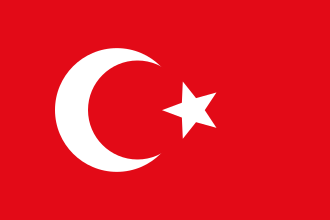
Note: no flag changes during brief French occupation of Egypt under Napoleon (1798 ~ 1801).
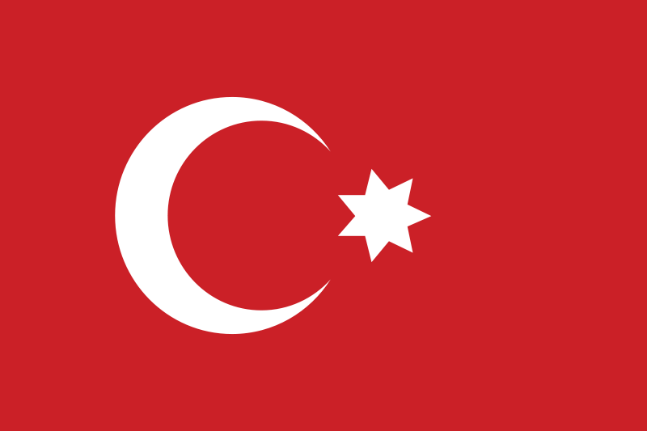
When the Ottoman-appointed governor of Egypt, Mohammad Ali Pasha, grew in power, he sought semi-independence from the empire, adopting a modified flag in 1826: the five-pointed white star became seven-pointed.
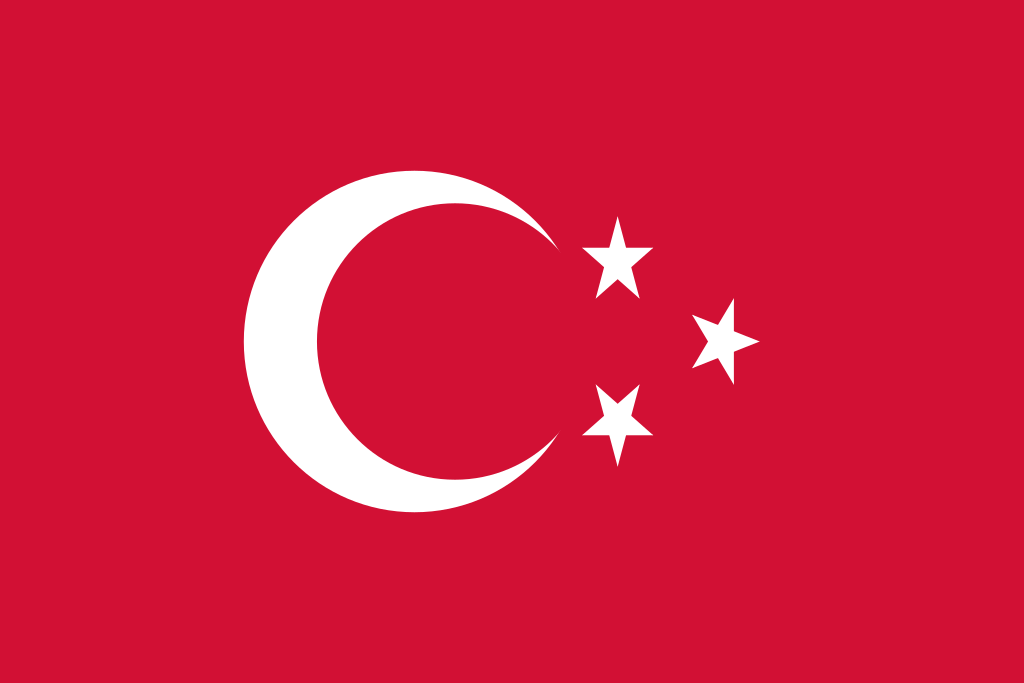
1867, Egypt’s status as “Ottoman province” was changed to a Khedivate (خديوية), a Persian word meaning principality (emirate). This meant that Egypt had become an independent state, but was still tied to the Ottomans in the same way that a colony is tied to the colonizer’s motherland. The Egyptian Khedivate flag was changed by replacing the single seven-pointed star with three five-pointed stars representing Egypt and the two huge territories to its south, Nubia and Sudan, both considered part of Egyptian sovereignty until 1956.
1882, Egypt was invaded and colonized by the British, who maintained the Khedivate title and system until 1914. During that time, the Egyptian border with the Ottoman Empire was demarcated in 1906 (today that’s the Egypt-Palestine border). Under British rule, Egypt got a new Ottoman-inspired flag: three white crescents with three white stars on the left-hand side over an all-red field. They represented the same three regions under Egyptian sovereignty: Egypt, Nubia, and Sudan.

1914, the Ottomans sided with Germany in WW1 because that was the side that was fighting the Russian empire (the Ottomans’ arch enemy at the time). In response, the British upended the pro-Ottoman Khedivate and elevated Egypt to a sultanate (on par with the Ottoman sultanate), thus severing all political ties with the Ottomans. But the flag remained the same.
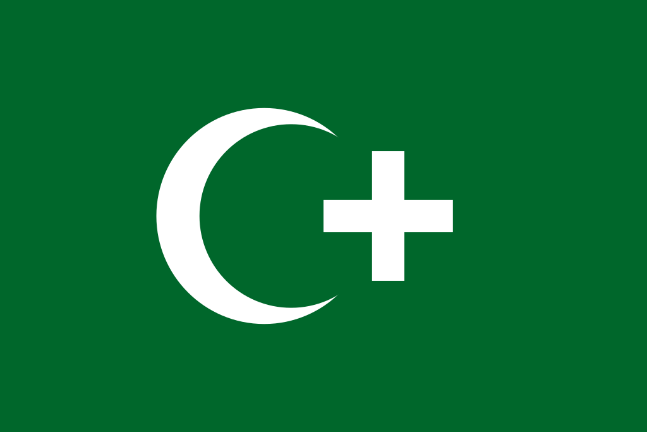
1918, Egyptians revolt against British rule, and adopt a new flag: A crescent and a crucifix representing Muslim-Christian unity, centered on a green field as homage to the Arab Fatimid dynasty that ruled North Africa from Cairo (909 ~ 1171 AD).
1922, the British agreed to grant Egypt a nominal independence, and work began to draft a constitution and establish a parliament. By 1923, the Kingdom of Egypt was declared and recognized. But the British did not leave. They stayed under the pretense that Egypt needed protection, especially the extremely vital Suez Canal.
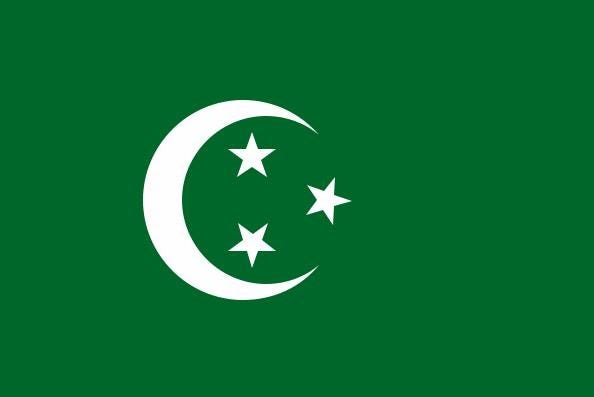
The newly elected Egyptian government chose to go back to the Khedivate flag that preceded British colonization, the one with the crescent and three stars, only they changed the all-red background to green, the color of Egyptian revolution.
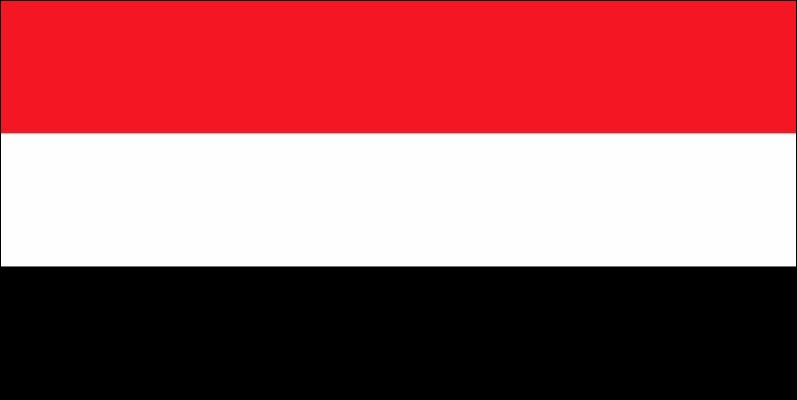
1952, a group of Egyptian military officers usurped power, toppling the British-backed king Faruk, and declared Egypt an Arab Republic. That Free Officers movement adopted as their banner a variation of the pan-Arab flag designed in Beirut in 1914 by the Young Arab Society, only they replaced the green band with a red one, and called it the Arab Liberation flag.
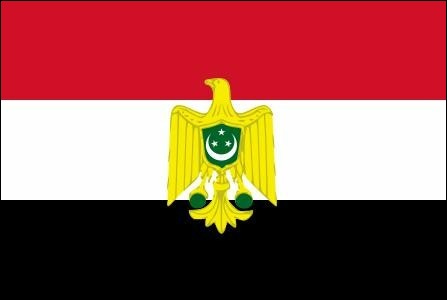
To represent the Egyptian piece of the Arab whole, a particularly Egyptian symbol was added to the center of that Arab Liberation flag: the golden eagle of Salahudddin — founder of the Ayyubid dynasty (1171-1260 AD) and destroyer of the Crusaders’ kingdom — with the flag of the Egyptian Kingdom painted on its chest.
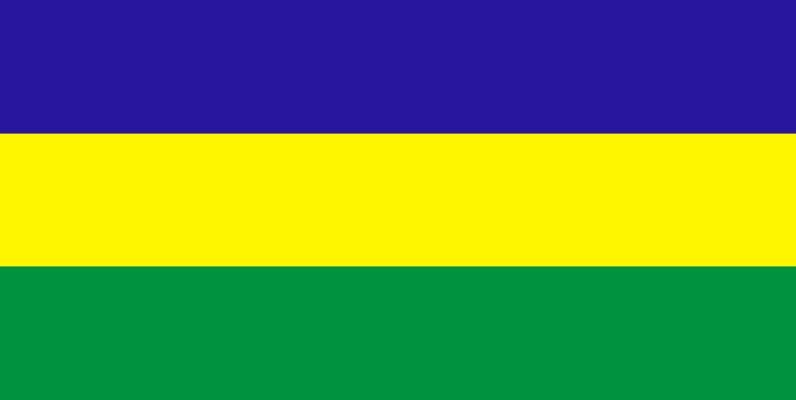
1956, after Egyptian president Abdul-Nasser nationalized the Suez Canal and withstood the assault by the British, French, and Israeli armies, a deal was brokered whereby the British agree to evacuate all their forces from Egypt in exchange for ending Egyptian sovereignty over Sudan. That same year, the British gladly orchestrated Sudan’s nominal independence from Egypt, but continued to rule the Sudan on the ground. The Republic of Sudan adopted a new flag with three horizontal bands (blue on top, then yellow, then green), designed by Makki, a Sudanese artist. Such colors were intentionally devoid of any ethnic, religious, political, or ideological symbols, and definitely a departure from pan-Arab flag colors. The neutrality of the flag was intentional — blue represented the Nile, yellow represented the Sahara desert, and green represented the fertile lands.
With Egypt completely free of British control, Nasser turned his attention to other Arab countries. Just two years later, in 1958, he convinced Syria (as well as the All-Palestine entity based in Cairo) to disband their governments and come under his rule, thus creating the United Arab Republic (الجمهورية العربية المتحدة). The Arab Liberation flag was used as the base flag, adding two green stars in the center to represent the two states that formed it, awaiting more Arab states to join (more green stars to be added).
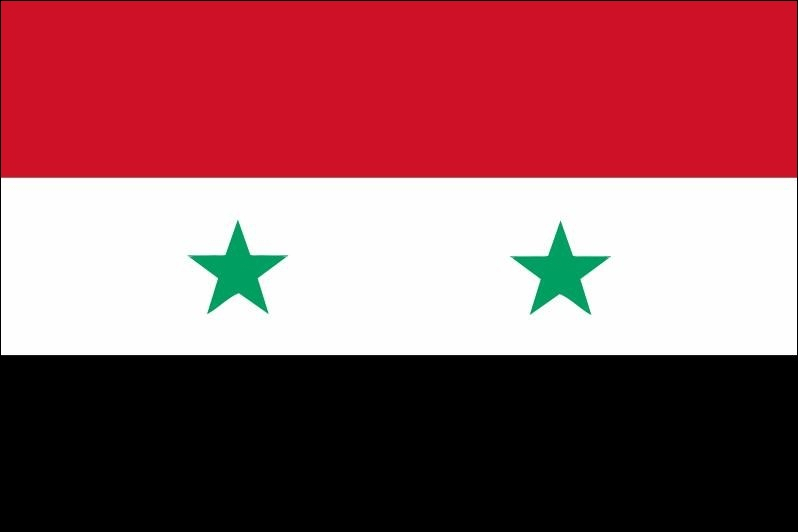
Even though the United Arab Republic was dissolved when Syria withdrew from it in 1961, Egypt continued to use the UAR flag above as is, while Syria reverted to its pre-union flag (the one with the three red stars).
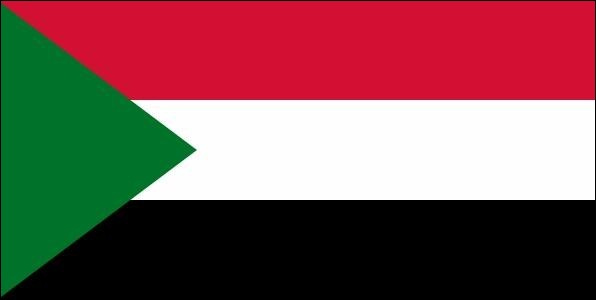
1969, the Sudanese military concluded a successful coup led by Gaafar Nimeiry, deposing the British-backed government. Inspired by Egypt’s Nasser, the Democratic Republic of Sudan adopted the Arab Liberation flag, then added a green triangle on the left-hand side, a resemblance to the Palestinian flag and a fulfillment of the four colors of pan-Arabism.
1972, Egypt joined the Federation of Arab Republics (اتحاد الجمهوريات العربية) that Libya’s Gaddafi had proposed. So Egypt adopted the federation flag — similar to the UAR flag, but instead of green stars, Salahudddin’s golden eagle was used once again with a slightly new design, adding the name of the federation underneath it. The federation included Syria, Libya, and Egypt, but as we explained in earlier parts, each country’s sovereignty was maintained intact.
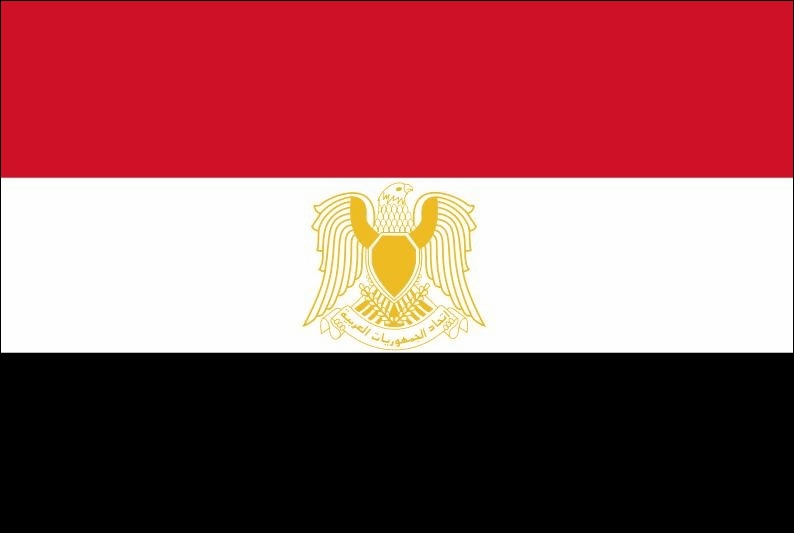
November 9, 1977, Egyptian president Sadat announced his plan to visit Tel Aviv to recognize “Israel” and normalize relations. The next day, November 10, the Federation was dissolved.
It wasn’t only Syria and Libya (the other two members of the federation) who boycotted Egypt over its betrayal, but so did every Arab nation (governments and peoples alike). That “peace” treaty, which the U.S. and Israel kept delaying to squeeze more concessions out of Egypt, was finally signed on March 26, 1979. It stipulated humiliating conditions, like forcing Egypt to allow Israeli ships passage through the Suez Canal and the Gulf of Aqaba, and to demilitarize the Sinai peninsula, which effectively stripped it from any meaningful Egyptian sovereignty (the reason why Egypt has no control over its border with Gaza).
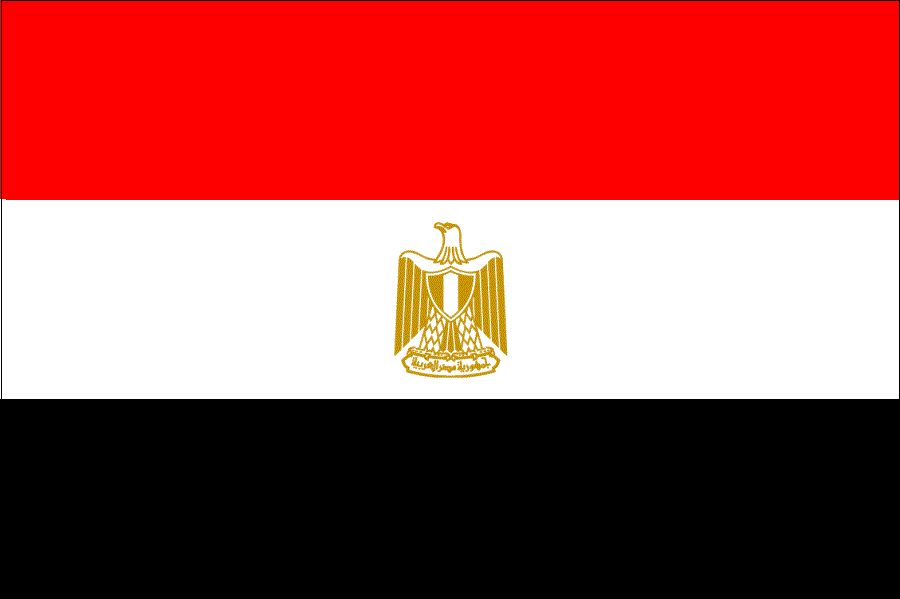
Because Egypt signed that humiliating treaty, the Arab League (جامعة الدول العربية) suspended Egypt’s membership for ten years, and Sadat was assassinated in 1981 precisely for stabbing all Arabs (especially Egyptians, Palestinians, and Syrians) in the back. Despite all that, Egypt kept using the Federation flag until 1984, when Mubarak (Sadat’s successor) made a change to Salahuddin’s eagle: reverting to the 1952 version, but with the Arab Liberation flag on its chest, and at its feet the Arab Republic of Egypt (جمهورية مصر العربية) is written. This flag is still in use today.
2011, the southern part of Sudan, which had been struggling for independence for years, finally seceded from Sudan through an unexpectedly amicable agreement after the Sudanese government (in Khartoum) administered a public referendum in the south. The results were almost 100% in favor of secession! Hence, the Republic of South Sudan was created, with Juba as its capital city.
South Sudan took a more pan-African flag design, a banner they had carried during their struggle for independence since 2005.
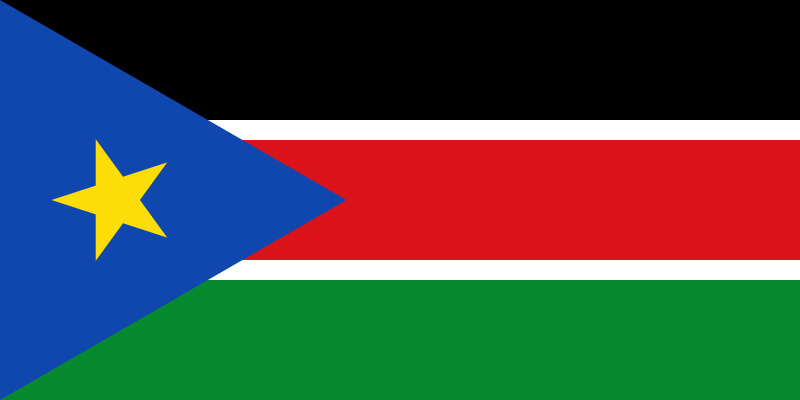
The South Sudanese flag is identical to neighboring Kenya’s flag, only instead of the Maasai shield and two spears in its center, there is a triangle on the left (resembling the design of the Sudanese flag), blue in color to enable contrast with the pan-African colors and a symbol for the Nile, plus a yellow star on the triangle, also common in neighboring African countries’ flags (see the flags of Central Africa, Congo, Ethiopia, and Cameroon).
Next, the Arabian Peninsula and the GCC countries, continued in part 5…