Arab Flags (Part 3)
The Evolution of Contemporary Arab Flags

1932, as the French did with Syria, the British recognized Iraq’s nominal independence, while their forces remained in bases in Baghdad and Basra. The following year (1933), King Faisal would die of a heart attack while in Switzerland (right when he became vocally critical of the Zionist take-over in Palestine). His son, Ghazi, became king at the age of 21.
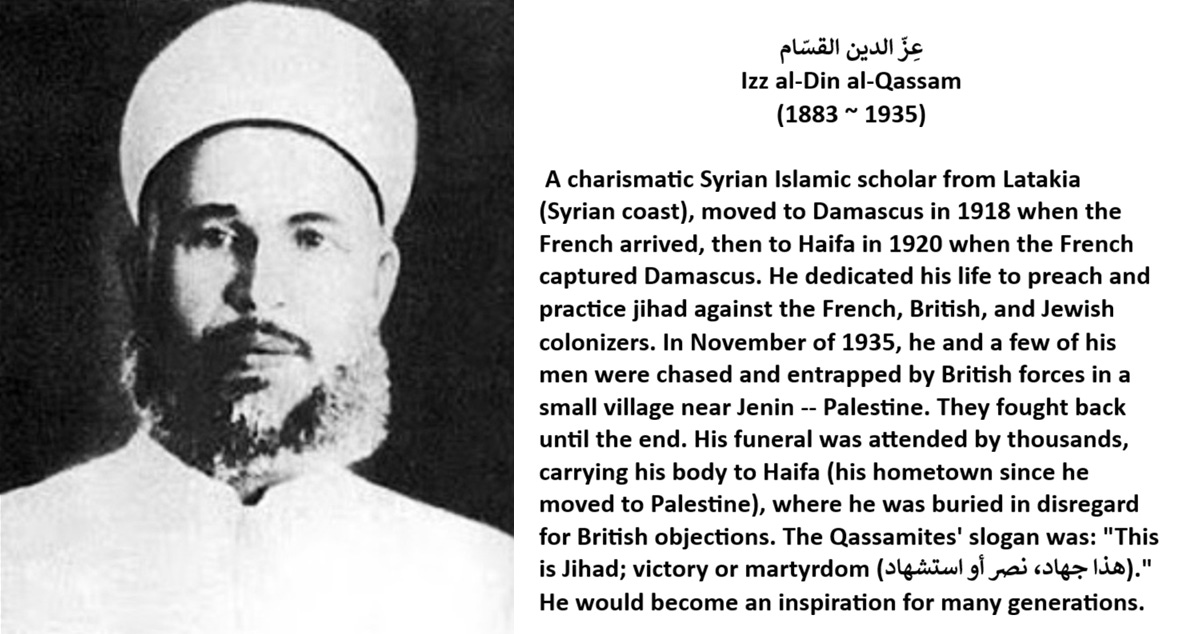
April 1936, the second (a.k.a. the Great) Arab Revolt was lit in Palestine by the Qassamite brigades five months after British soldiers entrapped and killed their leader, Izz al-Din al-Qassam, near the city of Jenin.
Haj Amin al-Husseini, grand mufti of Jerusalem, previously in favor of diplomatic solutions, began calling for strikes and armed resistance. He formed the Arab Higher Committee (اللجنة العربية العليا), which got global recognition as the official representative of the Palestinian people. The AHC demanded:
an end to Jewish “immigration” to Palestine — British authorities used to grant Palestinian citizenship/passport to every European Jew upon arrival to Palestine.
an end to confiscation of Arab lands and giving them to Jewish colonizers
an end to British control of Palestine
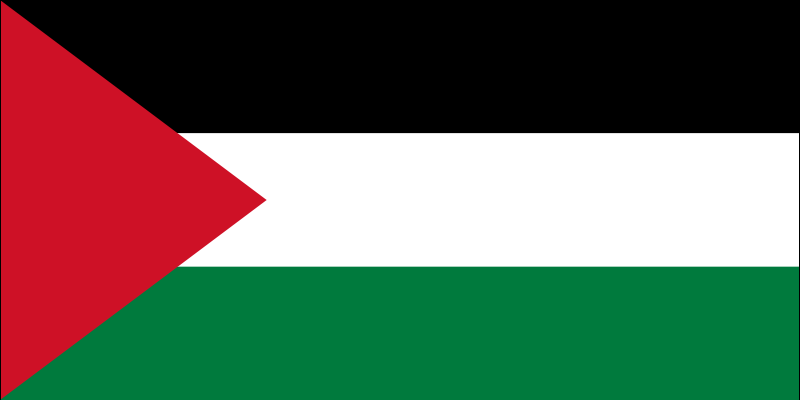
The AHC re-adopted the modified pan-Arab Revolt flag as the Palestinian flag, seeing that Palestine was inseparable from the Arab World.
It was called the Great Arab Revolt because its flames had spread all over the Levant:
Transjordanian tribal leaders established smuggling networks across the border; smuggling arms, ammunitions, and volunteering their own fighters.
September 1936, to contain the explosive mood in Syria, the French signed the Franco-Syrian Treaty, which offered Syria actual independence from French rule (to be implemented gradually). That year, they allowed the Alawite and Druze states to get re-integrated into the Syrian Republic.
October 1936, a military coup in Iraq, orchestrated by an anti-British nationalist military commander, Bakr Sidqi, threatening to overthrow the king by force if he doesn’t remove the pro-British prime minister and replace him with the popular nationalist Hikmat Sulayman. The king complied, and that was the first of a series of military coups driven by Arab nationalism.
1937, the British realized the Arabs of Palestine were not going to sit back and watch their land get “peacefully” robbed. It was in that year that the British decided to partition Palestine as a last resort to save the Zionist project. The Palestinians refused that solution as well, and continued their revolt. The British disbanded the AHC, arrested and/or killed its leaders, but Haj Amin managed to escape to Lebanon.
The French held onto Lebanon, and by 1939 the gifting of Alexandretta to Turkey was complete. We are told that was the price France had to pay Turkey not to join forces with Germany during WW2. Turkey renamed it Hatay, a reference to the Hittites who lived there over 4000 years ago.
April 1941, the rebellion in Iraq reached a boiling point: the regent (de facto king) at the time, Abd al-Ilah (son of Ali, the eldest son of King Hussein of Hijaz) was overthrown. He fled to Amman where his cousin, Abdullah, was emir. British forces (in their Baghdad and Basra bases) defeated the rebels and brought back Abd al-Ilah to the throne in June of that year.
When Nazi Germany conquered France in 1940, Lebanon naturally came under Vichy French rule. In 1941, British forces in Palestine invaded Lebanon in June and ended Vichy French rule in July. Lebanon and Syria were handed back to “Free France,” which hastened Lebanon’s and Syria’s full independence as the British demanded.
The internal situation in Lebanon was complicated. On the one hand, the Christians in government wanted to become part of France and Europe, but the Muslims (and many other Christians) wanted to reunite with the Syrian Republic. By the time Lebanon gained its independence in 1943, a deal had been reached where the Christian leadership promised to limit Lebanon’s ties with France in exchange for the Muslim leadership to forfeit their demand for reunification with Syria.
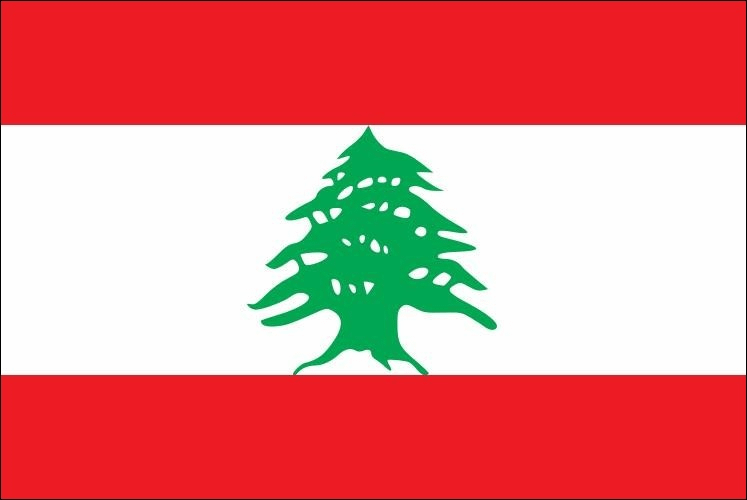
The Francophile Lebanese flag was changed to one designed by Henri Pharaon (wealthy businessman, art collector, and member of the Lebanese parliament), with two bands of red, a band of white in the middle, and the cedar tree in the center. It turned out Pharaon was also the founder of the Austro-Lebanese Association of Friendship — his flag design was to replace the French flag with the Austrian flag!
Note: some flags are/were drawn with a brown trunk for the cedar tree to make it look more natural. But the Lebanese constitution specifies that it must be all green.
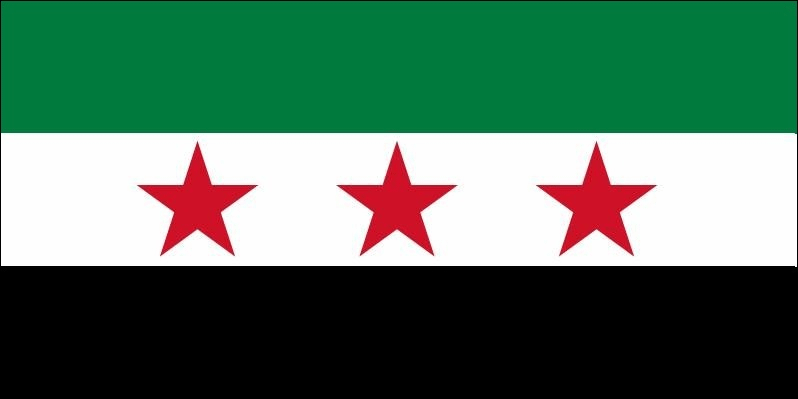
1946, French troops finally leave both Syria and Lebanon. On April 17, the Syrian Republic celebrated Evacuation Day (عيد الجلاء), commemorating the departing of the last French soldier from Syrian lands. Interestingly, they celebrate Independence Day (عيد الاستقلال) on March 8, which commemorates the first Syrian independence of 1920! The Syrian flag remained the same as from 1932.
Transjordan was to remain separate from Syria, Iraq, and Palestine. So the following month of that year, May 25, 1946, the British declared Transjordan fully independent, made Abdullah king, and renamed the emirate to the Hashemite Kingdom of Jordan. The Jordanian national anthem (O’ Glorious Syria) was canceled and replaced with the royal anthem of “Long live the king….” Jordan’s flag remained unchanged, only it no longer referred to the Syrian kingdom.
June 12, 1946, the Arab League recognized the reconstituted Arab Higher Committee (AHC) in Palestine under the leadership of Haj Amin al-Husseini, who started calling for the independence of the State of Palestine from the River to the Sea. But Jordan’s king Abdullah led the effort to postpone and obstruct any formal declaration, because the British wanted him to rule over the parts of Palestine that the Zionists don’t colonize. Long story short, the AHC lacked power and Arab support. It was dissolved in September of 1948, eventually replaced by the All-Palestine government (حكومة عموم فلسطين) formed in Gaza then relocated to Cairo where it lost its governing powers on the ground and remained a powerless representative at international conferences.
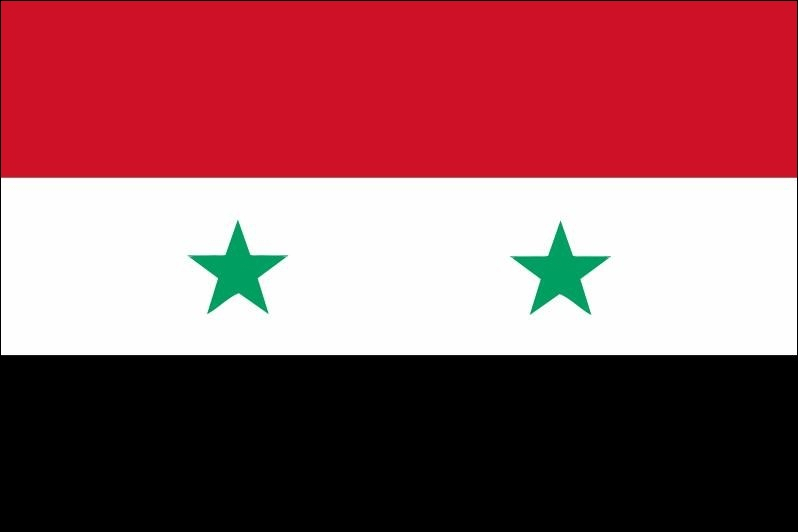
February 1958, Syria agreed to dissolve its government in order to unite with Egypt and become part of the Egyptian-led United Arab Republic. The Cairo-based All-Palestine government was also dissolved into it (and never returned again). The Egyptian and Syrian flags were merged to create a mixture of the two designs: Red band on top, then white, then black, with two green stars in the center, representing the two states that agreed to join thus far. The idea was that as more Arab states joined the UAR (الجمهورية العربية المتحدة), the more green stars would be added to the flag.
In response to this anti-colonial move, the British pushed Jordan and Iraq to form an opposing union called the Hashemite Arab Federation (الاتحاد العربي الهاشمي). And since both countries had the same flag, distinguished only by the number of stars, the new flag of that Federation was simply the common denominator between the two flags: the 1920 pan-Arab Revolt flag without any stars.
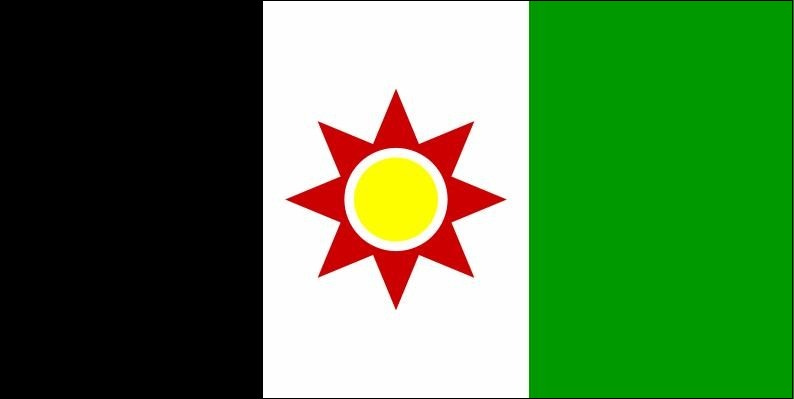
August 1958, only six months later, one of the bloodiest coups took place in Baghdad. The Hashemite monarchy in Iraq came to an end, and rising to power was Abdul-Karim Qassim (Marxist). Jordan re-added the star, while Iraq adopted a variation of the Young Arab Society’s pan-Arab flag (green, white, and black bands flipped vertically, and two symbols — a yellow sun surrounded by an eight-pointed red star — were added to the center, representing the Kurds and Assyrians respectively.
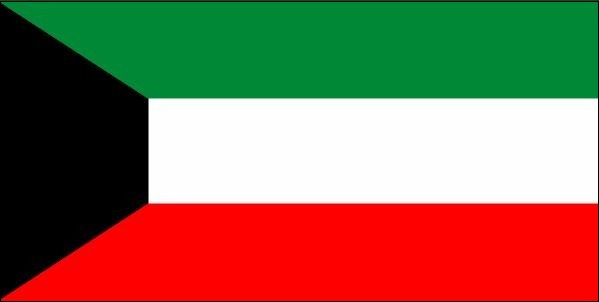
June 1961, against the wishes of Abdul-Karim’s government, the British forced the independence of Kuwait. The State of Kuwait adopted a flag similar in design to the pro-British Hashemite Iraqi flag, with the black, red, and green colors rotated counter-clockwise.
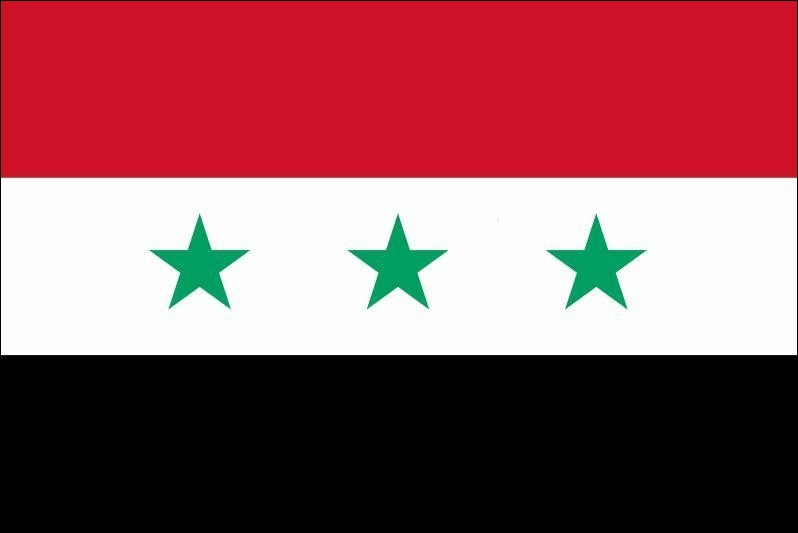
September 1961, Syria withdrew from the United Arab Republic and re-established its original sovereign republic, reverting back to the flag it was using before its union with Egypt: the green, white, black bands with three red stars in the center.
1963, the Arab Baath party — which calls for the resurrection of the Arab nation from the Gulf to the Atlantic — usurped power in both Iraq and Syria (February and March respectively). Strangely, Baathist Iraq recognized Kuwait’s independence. Iraq proposes reviving the UAR, only this time under the Baathist leadership. Thus, Syria and Iraq decide to adopt the UAR flag with three green stars — representing Syria, Iraq, and Egypt. Egypt, however, declined the invitation, as it did not want to be run by the Baathists.
1971, two years after Gaddafi usurped power in Libya, he proposed reviving Arab unity in a more practical and acceptable manner: the new union does not dissolve countries or regimes. It was the Union of Arab Republics (اتحاد الجمهوريات العربية), something similar to the European Union. Since all three republics’ flags that agreed to join — Egypt, Syria, and Libya — were based on Egypt’s Arab Liberation flag, it was easy to design the Union’s flag: red band on top, then white, then black, with Salahuddin’s golden eagle in the center, and the words “The Arab Republics Union” written below its feet. That way, no need to change the number of stars every time an Arab state joined or left the union. Iraq refused to join because it had problems with Libya, and proposed a union that excluded it. Syria and Egypt turned down Iraq’s offer because they were already committed to the Libyan version.
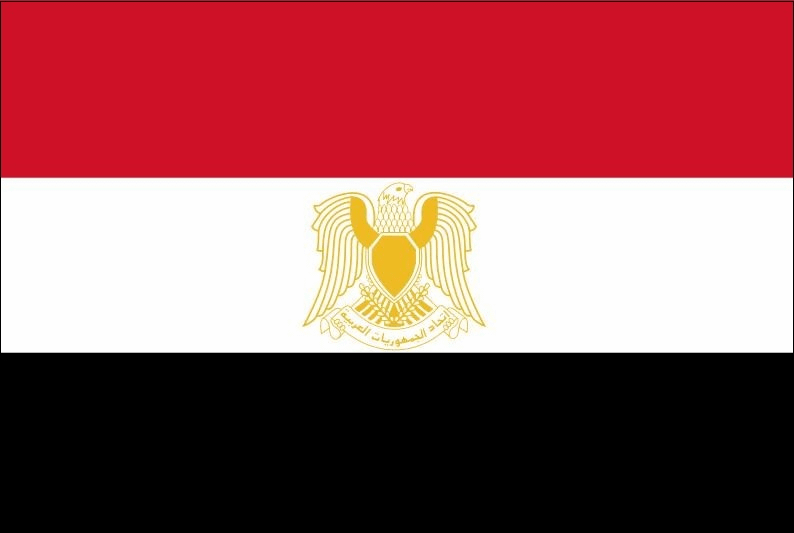
1977, Egyptian president Sadat visited Tel Aviv in November to normalize relations with Israel. For that reason, Egypt was ostracized from the Arab world. The Arab Union was effectively dissolved, but it took the three member nations a while to change their flags. In 1980, Syria reverted back to the United Arab Republics flag (the one with the two green stars) to signal to Syrians and all Arabs that it reminisced the days of Egyptian-Syrian unity under Abdel-Nasser; to say that Syria (unlike Egypt) did not deviate from the path towards Arab unity.
1990, Saddam Hussein of Iraq added the words “God is Greater” in his own handwriting (اللـه أكبر) to the Iraqi flag. It was a propaganda stunt to rally the Arabs and Muslims around him and his regime during the U.S. war on Iraq that year. It definitely made him more popular among the sentimental.
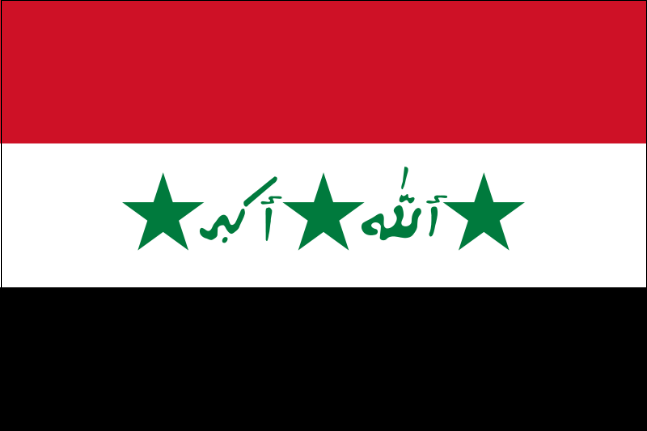
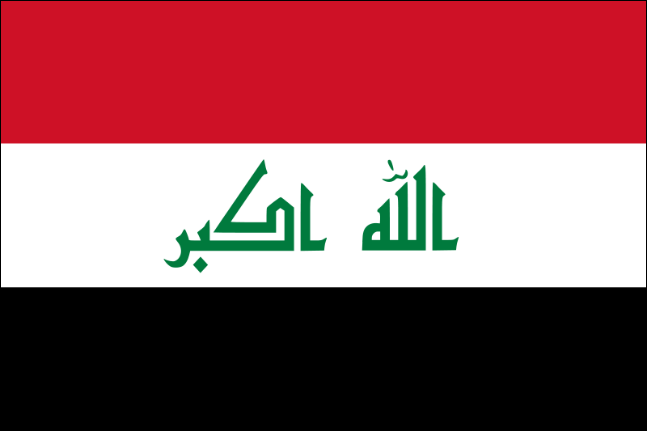
2003, the U.S. invaded Iraq, toppled the regime, and installed a new government. Many proposals were made for the new Iraqi flag. Ultimately, the U.S. kept the same flag with two alterations: (1) the three stars were removed completely, and (2) the words inscribed by Saddam’s own hand-writing (Allahu Akbar) were printed in the Kufic script (particular to the city of Kufa in Iraq, famous throughout history for being a center of art, knowledge, and progress). It was as thought to say: what the three green stars represented (unity between Iraq, Syria, and Egypt) was never realized; no reason to keep hoping.
2024, the Baathist regime in Damascus fell; got replaced by the most prominent Turkish-backed Syrian militia (headed by Ahmad al-Sharaa, formerly known as al-Joulani). Although no new constitution has been drafted yet (and therefore no official flag set), everyone in Syria is using the flag that was initially raised during the first year of the popular uprising in 2011, which is the flag of the Syrian Republic in 1932.